
1. Start with the Basics: How a JCT Contract Works
A lot of UK building projects use some form of JCT Contract. At its core, it’s built on a few simple principles:
- You are paid for the work defined in the contract documents
- Changes must be instructed
- Time and money are linked but dealt with separately
- Records win disputes
Key Roles
- Employer (Client)
- Main Contractor (MC) – Has a contract with the Client
- Contract Administrator (CA) – often the architect or employer’s agent
- Subcontractors – Have a separate contract with the Main Contractor, which should follow the principles of the main contract to avoid conflicts.
2. Establishing Your Baseline (This Is Critical)
If you don’t know what you priced, you can’t prove change. You also need to know when to carry out the works otherwise you don’t know when to start or finish.
2.1 Tender Scope
Your baseline includes:
- Drawings
- Specifications
- Employer’s Requirements
- Attendances
- Clarifications/exclusions
If something isn’t clearly included, it’s potentially a variation later.
2.2 Programme (Time Baseline)
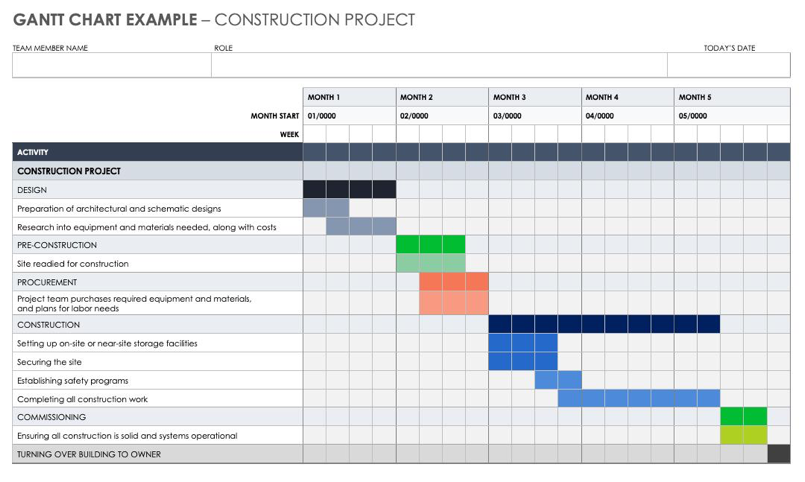
Alternatively if a bar chart is not available use a schedule of work setting out:
· Each area with start dates and durations.
· How much notice there will be to confirm the start of an activity
Ask your self:
- What sequence did you assume in the tender? – make sure it’s stated
- When were you supposed to start/finish?
- What access did you expect?
If the job is now out of sequence or delayed, that’s not neutral. It has cost.
2.3 Cost Breakdown
You should understand:
- Labour rates
- Material allowances
- Subcontract packages
- Preliminaries (site management, supervision, welfare, etc.)
2.4 Attendances
It’s vital to know who is responsible for things such as:
- Scaffolding
- Power
- Welfare
- Unloading
- Storage / area / container
- Cranage / hoists
- Builders’ work in connection (BWIC)
- Lighting
- Waste management, from where to what.
- Cleaning
- Manuals
If these aren’t provided as agreed, you are incurring additional cost.
3. Avoid confusion, be upfront and clarify when missing information is required.
At the beginning of a project information is often incomplete.
Using the program do an Information Required Schedule, IRS
Provide a reasonable date by which information is required allowing for:
· Contractors / suppliers design
· Approval periods
· Procurement lead times
· Delivery
· Any price increase dates which were used in the tender.
Review with the client the IRS on a regular basis and give a warning notice when dates are missed.
4. When Things Go Wrong (They Will)
On problem jobs, the biggest issue is usually this:
· The Main Contractor does not issue formal instructions
But still expects the subcontractor to proceed.
This is where most subcontractors lose money.
5. No Instruction? You Must Protect Yourself
Under JCT, variations should be instructed. But in reality:
- Site teams give verbal instructions
- Works proceed without paperwork
- Commercial teams later reject the cost
5.1 Confirmation of Verbal Instruction (CVI)
When told to do something:
You issue a CVI immediately.
Example wording:
“Further to your verbal instruction today at [time], we confirm we have been instructed to [describe works]. Unless we hear otherwise within [X] days, we will proceed and treat this as a Variation.”
Why this works:
- You’ve created a paper trail
- You’ve given the MC a chance to reject it
Example for a template:
Sub contractor Name: Job number
Project:
Project Contract Number:
Confirmation of Verbal Instruction (CVI) number :
Dear [Main Contractor / Site Manager Name],
Further to our discussion on site on [date] at [time], we confirm that we were verbally instructed by [name] to carry out the following works:
Description of Works:
[Clear, factual description of what you’ve been asked to do]
Location:
[Area / level / zone]
Reason (if known):
[E.g. design change / coordination issue / client request]
As this instruction is not included within our original subcontract scope, we consider this to be a Variation.
Unless we receive written instruction to the contrary within [2–5] working days, we will proceed with the works and record all associated costs for valuation purposes.
We will provide a full breakdown of costs in due course.
Please confirm how you wish us to proceed.
Kind regards,
[Your Name]
[Company]
CC to QS
5.2 “Standing” of a CVI
A CVI is not automatically a formal instruction under JCT—but:
- If the MC does not reject it within a reasonable time,
- And you proceed based on it,
It becomes strong evidence of instruction and entitlement
Typical rejection window in practice: 2–5 working days
6. Record Everything (This Is Where You Win or Lose)
If you do extra work and can’t prove it, you won’t get paid.
6.1 Daily Records
Traditionally sites used to keep a daily diary, but many of the records can be obtained from other places these days. Examples of the information which is useful are:
- Labour on site (names, hours, activities)
- Materials used
- Areas worked in
- Delays / disruptions
- Instructions received
- Meetings held
From experience recalling what happened when is the most frustrating activity when compiling delay and disruption claims. One of the most useful documents is a marked-up & annotated program each week. It should have notes saying why activities have not occurred when they should or why things have started at different times to expected. If this can be supported with dated photos all the better.
6.2 Getting records signed
This is crucial:
- Ask the MC’s site manager to sign a Daily Record Sheets (DRS)
- Even a signature or email acknowledgment is powerful
If they refuse:
- Email it daily anyway → creates a record
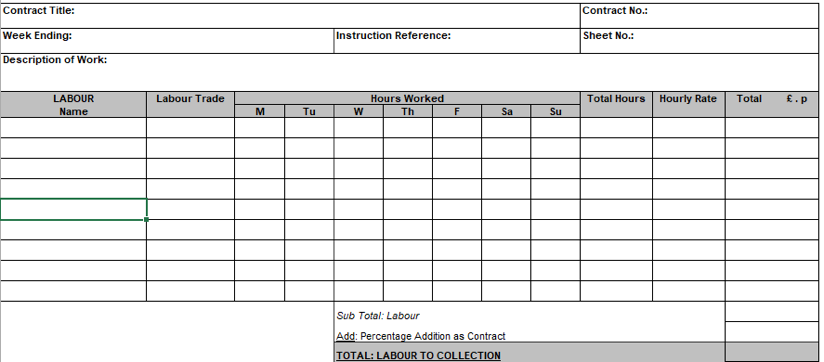
Example – site do not need to put the rates in, this can be done later.
Each C of I should be supported by these signed records. They make such a difference.
Example of a Weekly Record Sheet covering one instruction.
7. Valuing the Changes (Getting Paid)
7.1 Adding CVIs / Variations to Your Valuation
Each month:
- Include all instructed variations
- Include all CVI-backed works
Break them down clearly:
- Labour
- Materials
- Plant
- Prelims impact (if applicable)
Don’t wait until final account—get it in early.
7.2 If the MC pushes Back
Common MC responses:
- “No instruction”
- “Should have been included”
- “No records”
Your defence:
- CVIs issued
- No rejection
- Signed records
- Clear link to original scope
8. When the number of Variations Becomes Significant
If there are lots of instructions, this changes things.
8.1 Impact on Preliminaries
You originally priced:
- Duration
- Supervision
- Site setup
But now:
- Programme is longer
- Work is disrupted
- More management required
You are entitled to additional preliminaries
8.2 How to Claim Additional Prelims
At final account stage (or earlier if large):
Demonstrate:
- Increase in duration (days/weeks/months)
- Increased supervision
- Inefficiency / disruption
Typical costs:
- Site manager time
- Additional visits
- Extended welfare/plant
- Reduced productivity
8.3 Link It Back to Cause
You must show:
- Variations / instructions caused:
- Delay OR
- Prolongation OR
- Disruption
No link = weak claim
Clear cause-effect = strong claim
This is where the annotated program of what happened when comes in really useful to provide a supporting narrative.
9. Final Account Strategy
By the end of the job, you should have:
- A log of all CVIs
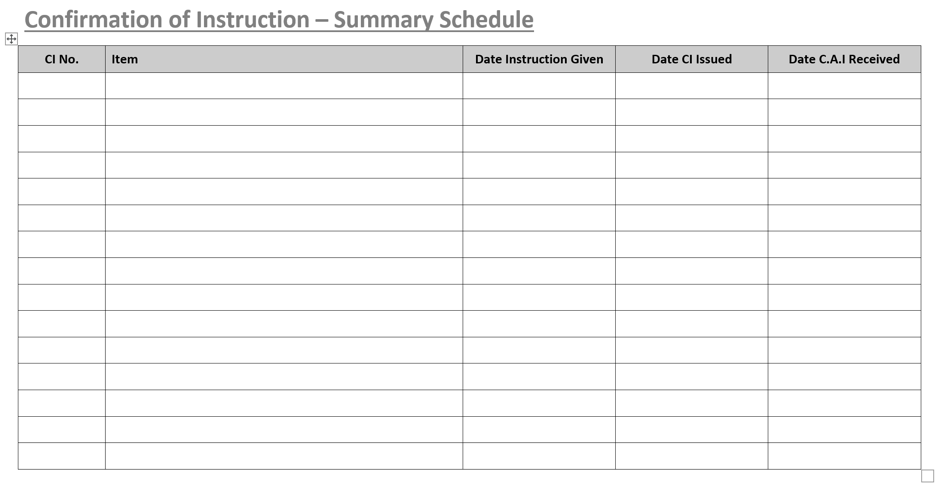
- Supporting emails
- Signed daily records
- Variation valuations submitted monthly
Your final account becomes:
- A reconciliation exercise, not an argument
10. Common Mistakes to Avoid
- Waiting for formal instructions before acting (job delays, but no protection)
- Not issuing CVIs
- Poor or no daily records
- Leaving variations to the end
- Not claiming prelims despite major change
11. Simple Rule to Remember
If it’s not in the contract, and you’re asked to do it—record it, confirm it, and value it.